
Foundations7-minute readPublished June 11, 2026
Written by the Construction AIM team, a general contractor holding an RBQ licence
During heavy rain, the municipal sewer can fill up to the point of backing up into basements. A backwater valve, sometimes called a backflow valve, keeps wastewater from coming back up through the floor drain, the toilet or the shower in the basement. Here is what the regulations require in Montreal, the types of valves and the maintenance to plan for.
What is a sewer backup?
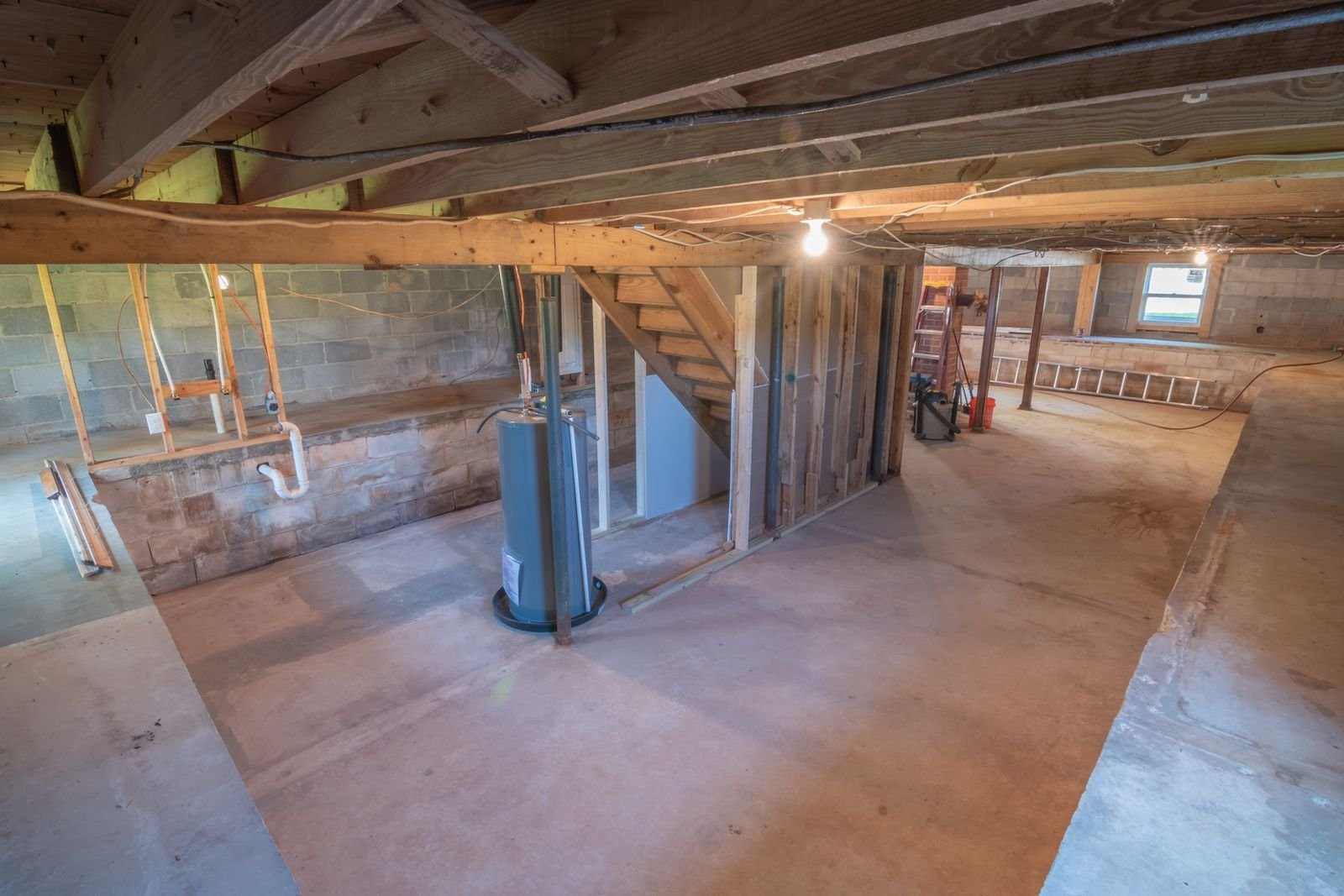
When a lot of rain falls in a short time, the water that collects in the streets puts too much pressure on the municipal sewer system. The water then rises back into the building connections and comes out through the lowest fixtures, the ones located below street level.
On the insurance side, most insurers offer sewer backup coverage as an optional endorsement. Some require a valve to be installed after a claim. Check your policy.
How does a backwater valve work?
The valve is installed on the drainage piping. It lets wastewater flow out to the sewer and closes when the flow reverses. In Montreal, it is installed on the drainage piping of each plumbing fixture or group of fixtures in the basement.
Normally closed or normally open?
- Normally closed valveThe flap stays shut at rest and opens under the push of draining water. It is the most common type in homes. Because it blocks air circulation, it is not allowed on the building drain, that is, the pipe that carries all of the building’s wastewater to the sewer. It is therefore installed on the branches serving fixtures located below street level.
- Normally open valveIt stays open and closes only when there is a backup, which lets air circulate. According to the Régie du bâtiment du Québec (RBQ), it may be installed on the building drain only if that drain serves a single dwelling, and some municipalities prohibit this installation.
In a plex, which has several dwellings, protection therefore generally relies on valves on the basement branches rather than on a single valve on the main line. In every case, the valve must be CSA-certified.
What the regulations require in Montreal
The Quebec Construction Code (Plumbing chapter, Article 2.4.6.4) requires a valve to protect fixtures, sump pits, sumps and traps located below street level.
In 2011, the City of Montreal adopted By-law 11-010 on protecting buildings against sewer backups. According to its text:
- 2011year the City of Montreal adopted By-law 11-010
- RBQ 15.5licence subcategory for plumbing installation
- CSAcertification required for every valve
- it applies in particular to new buildings, to buildings where the plumbing is being altered and to those that have had a backup or a flood;
- a valve must be installed on every drain pipe connected to a building drain that serves a fixture located below the level of the adjacent street;
- a valve must also be installed downstream of the trap of a floor drain;
- the owner must keep this equipment in good working order.
The City points out that since 2011, valves must be installed in all new buildings. For permits, check with your borough. In Laval, on the South Shore and on the North Shore, each municipality applies its own rules.
Two other points to keep in mind:
- Licence: in Quebec, plumbing work must be done by a contractor holding RBQ licence subcategory 15.5 (Plumbing contractor).
- Financial help: the City of Montreal’s RénoPlex program lists the installation of a backwater valve, including under an existing slab, among the eligible work for buildings with 1 to 5 dwellings. The application must be accepted before the work begins.
Access and maintenance: twice a year
The Code requires the valve to be accessible for maintenance, repair, replacement and cleaning. If it is inside a wall, a ceiling or under a floor, a removable panel or an access hatch must be provided.
The City of Montreal recommends checking, ideally twice a year, that the valve works and is not blocked. CAA-Québec suggests an inspection at least once a year, ideally at the start of summer. When you check it:
- open the access following the manufacturer’s instructions;
- make sure the flap moves freely;
- remove any debris that could keep it from closing;
- inspect the rubber seal and the hinges;
- close the cover properly.
If the valve is damaged or hard to reach, have it checked by a plumber.
Backwater valve, French drain and sump pit: three different roles
These three components are often confused:
- The backwater valveProtects against water coming back from the municipal sewer.
- The French drainCollects the water in the soil around the foundation.
- The sump pitAlso called a sump basin, it collects water from the drain before it is discharged, often with a pump.
So a new drain does not protect against a backup, and a valve does not stop water coming through the walls. A French drain job is still a good time to check the valves.
A French drain job is still a good time to check the valves.
How Construction AIM works
During the visit, we locate the plumbing fixtures in the basement, the floor drains, the existing valves and how easy they are to reach. If you ask for it, installing a valve can be added as an option to a waterproofing or French drain job.
The type of valve and its location depend on the plumbing layout, the number of dwellings and the applicable rules. This work is done by a contractor holding the appropriate RBQ licence, with access planned for maintenance. The detailed quote specifies the work included, the exclusions and the schedule. Permits are generally obtained by the owner or coordinated with them, any extra is approved in writing before it is carried out, and acceptance of the work comes with a written warranty based on the type of work. For service details: foundation waterproofing and French drains.
Frequently asked questions
My building is older than 2011: do I have to install a valve?
By-law 11-010 applies in particular to buildings where the plumbing is being altered and to those that have had a backup or a flood. Even when it is not mandatory, a valve is strongly recommended if fixtures are located below street level. Your borough can confirm what applies to your building.
How much does it cost to install a backwater valve?
Our prices are based on the current wage rates of the Commission de la construction du Québec (CCQ), set by the collective agreements for the sector concerned (residential, institutional and commercial, industrial), plus the materials and equipment specific to each job. Every quote is free, detailed and prepared after a site visit.
Can a single valve be installed on the main sewer line of a plex?
Generally, no. A normally closed valve is not allowed on the building drain, and a normally open valve is allowed there only if the drain serves a single dwelling. In a plex, each branch located below street level is protected instead.
My valve is under the concrete slab with no access. What should I do?
Access has to be restored, for example with a hatch, so the valve can be maintained as the Code requires. The RénoPlex program even has a category for installing a valve under an existing slab.
Is the valve enough to protect my basement?
It is essential protection, but not the only one. Downspouts must discharge away from the foundation, the ground must carry water away from the building, and a sump pump with battery backup adds another layer of safety.
Let’s talk about your project
Want to check how well your basement is protected or add a valve to your foundation work? Ask for a free quote, prepared after a site visit. We work in Montreal, on the North Shore, including Laval, and on the South Shore.
Do you own a house, a duplex or a triplex? See how we work with homeowners and plex owners.
Scope of this guide. This content is general in nature. It does not replace a site visit or the opinion of an engineer or another professional about a specific building. The scope, price and conditions of any work are set out only in a written quote.