
Foundations6-minute readPublished September 27, 2026
Written by the Construction AIM team, a general contractor holding an RBQ licence
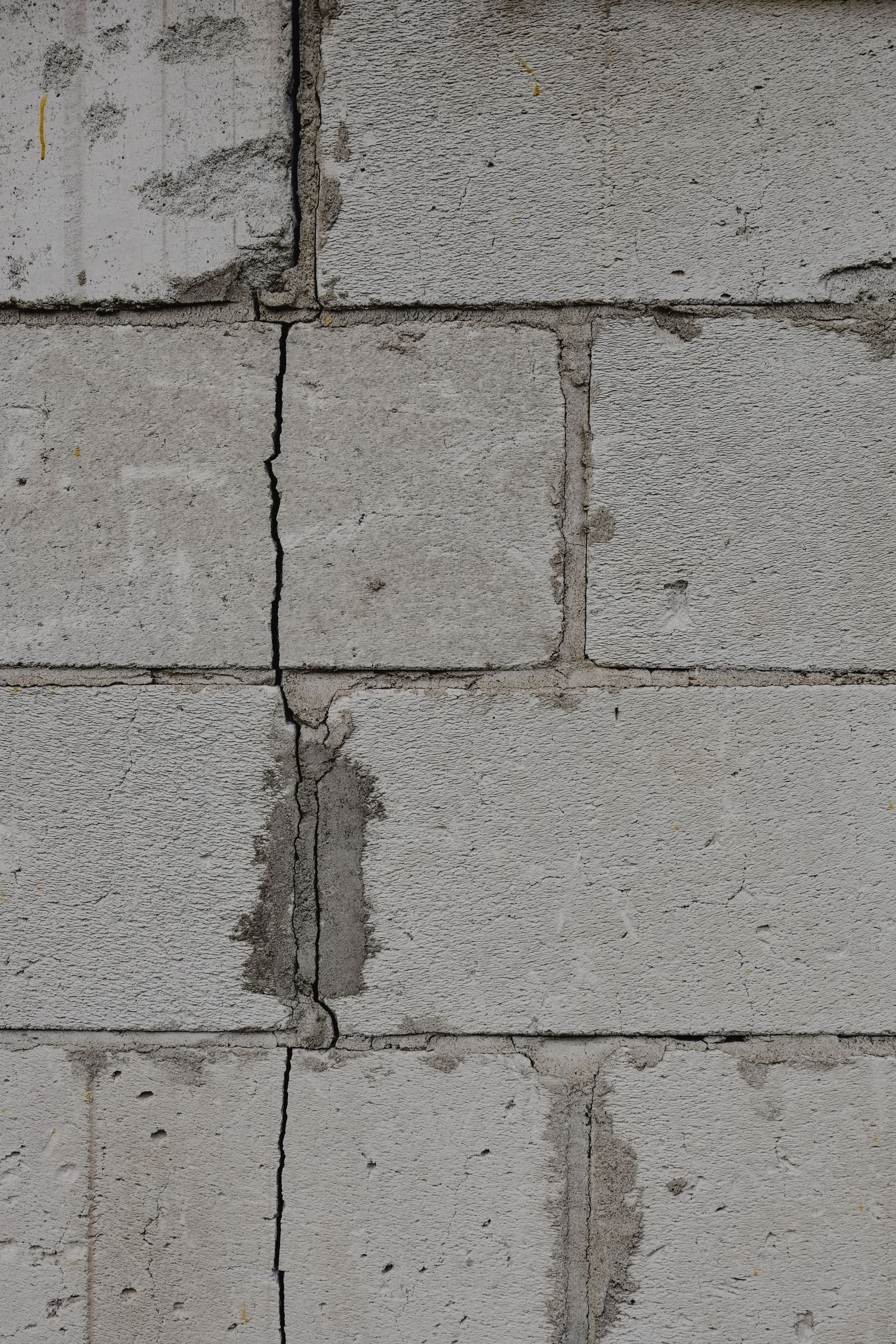
A crack in a basement wall is not always serious, but it always deserves an explanation. The right foundation crack repair depends on three questions: does the crack let water in, is it still moving, and what is the wall made of? Here is how to choose between polyurethane injection, epoxy injection and mortar repair.
Reading a crack: what it tells you
Not all cracks tell the same story:
- Often harmlessShrinkage crackFine, often vertical or in a spiderweb pattern, it appears as the concrete dries after the pour. It is the most common type and, in general, it has no structural consequences.
- Have it assessedHorizontal crackThis is generally the most worrying kind. It can point to excessive lateral pressure from the soil, water or frost on the wall.
- Keep an eye on itStair-step crackIn a block wall: it follows the joints and can signal differential settlement, meaning the soil is sinking more in one spot than in another.
The most important factor is not whether there is a crack, but how it changes over time. To track it, mark its ends in pencil with the date, measure its width and take photos, then compare over a few months.
The most important factor is not whether there is a crack, but how it changes over time.
When to consult a structural engineer
Have the situation assessed by an engineer who is a member of the Ordre des ingénieurs du Québec (OIQ) if:
- the crack gets longer, wider or changes shape;
- new cracks appear;
- a crack is horizontal or the wall is bulging;
- doors or windows suddenly start to stick.
The engineer’s report identifies the cause and the work to be done. The contractor then carries out those recommendations.
Polyurethane injection: to stop water
Polyurethane is a resin injected into the crack. When it comes into contact with water, it expands and forms a flexible foam that bonds to the sides of the crack and blocks leaks, even under water pressure. The crack must be damp, or dampened, for the reaction to take place.
Its flexibility lets it follow small movements of the concrete. However, polyurethane seals the crack without restoring the strength of the wall. It is the typical solution for a crack that lets water into a poured concrete wall with no sign of a structural problem.
Epoxy injection: to restore the strength of the concrete
Epoxy is a rigid resin. Once cured, it bonds the two faces of the crack back together and aims to restore the structural integrity of the concrete. Depending on the product, the crack must be dry or can be damp, and each product is designed for a range of crack widths.
A rigid resin does not follow movement: on a crack that is still active, the engineer may recommend dealing with the cause of the movement first, or adding steel anchors to keep it from reopening. When a crack raises a structural issue, the choice of epoxy and the method are up to the engineer.
Mortar repair: the traditional approach
Mortar repair covers several techniques:
- Hydraulic cementIt sets in a few minutes and expands as it hardens, which makes it possible to seal an active leak. The crack is first opened into a « U » shape, deeper than it is wide, then cleaned.
- Exterior repair mortarAfter excavation, the crack is opened and filled, then the wall is protected with a membrane.
- Compatible mortar on stoneIn a stone foundation, a mortar that is too hard can break off the edges of the stones. Lime provides the flexibility needed. That is why lime resurfacing is used on some older walls.
In a concrete block foundation, water travels through the cores of the blocks. Injection is less suited to this type of wall, and exterior waterproofing is often the only realistic way to prevent leaks.
Foundation crack repair: from the inside or the outside?
| Situation | Solution usually considered |
|---|---|
| Isolated crack letting water in, poured concrete wall | Polyurethane injection from the inside |
| Crack with a structural issue, according to the engineer | Epoxy injection, sometimes with anchors or other reinforcement |
| Active leak to be sealed quickly | Hydraulic cement |
| Several cracks, aging drain, block or stone walls | Exterior repair, membrane and new French drain |
| Old stone wall, interior side | Resurfacing or repointing with a compatible lime mortar |
Repairing from the outside takes more work, but it lets you see the full height of the wall, check the drain and install a membrane that protects the whole foundation. A crack repaired from the outside must in fact be protected by a membrane.
How Construction AIM works
During the visit, we look at the type of wall (poured concrete, block, stone), the path and width of the cracks, signs of water and the condition of the drain. If we see structural signs, we recommend an assessment by a structural engineer and coordinate the work with the engineer based on the report.
On our waterproofing jobs, the wall surface is cleaned and prepared, then active cracks are repaired with mortar or by epoxy injection, depending on their type. On a stone wall, we can do lime resurfacing on the interior side.
The detailed quote specifies the number of cracks whose repair is included. Any additional crack found during the work is covered by a change order approved in writing before it is repaired. Conditions not visible during the visit are excluded and handled the same way. The work complies with the Quebec Construction Code and CNESST rules, and acceptance of the work comes with a written warranty based on the type of work. See our foundation and crack repair page.
Frequently asked questions
How much does foundation crack repair cost?
Our prices are based on the current wage rates of the Commission de la construction du Québec (CCQ), set by the collective agreements for the sector concerned (residential, institutional and commercial, industrial), plus the materials and equipment specific to each job. Every quote is free, detailed and prepared after a site visit.
Does a dry crack need to be repaired?
A fine, dry and stable shrinkage crack mainly needs to be monitored. Sealing it can prevent future leaks. If it changes, have it assessed by an engineer.
Can a block or stone foundation be injected?
Injection is mainly used in poured concrete. For block and stone, drainage and exterior waterproofing are generally preferred, with compatible mortars.
Can a crack come from a failing French drain?
A drain that no longer drains lets water build up against the wall. Water and frost pressure then increase, which encourages leaks and can make cracks worse. Repairing the crack without fixing the drainage often solves only part of the problem.
Is financial help available?
In Montreal, the RénoPlex program lists crack repair and foundation waterproofing among the eligible work for buildings with 1 to 5 dwellings. The application must be accepted before the work begins.
Let’s talk about your project
Is a crack worrying you or letting water in? Ask for a free quote, prepared after a site visit. We work in Montreal, on the North Shore, including Laval, and on the South Shore.
Do you own a house, a duplex or a triplex? See how we work with homeowners and plex owners.
Scope of this guide. This content is general in nature. It does not replace a site visit or the opinion of an engineer or another professional about a specific building. The scope, price and conditions of any work are set out only in a written quote.